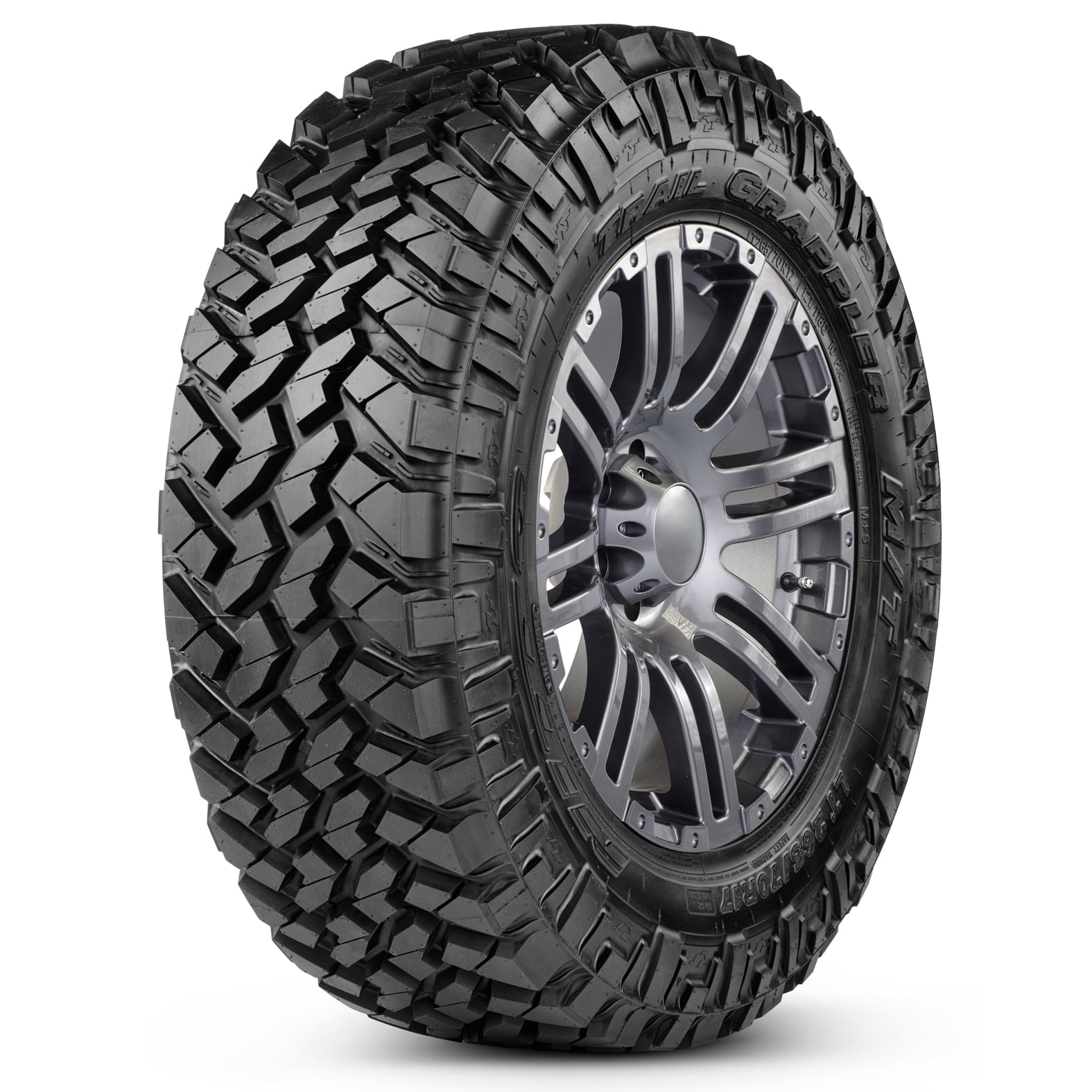
Nitto Trail Grappler im Test
The Nitto Trail Grappler is widely regarded as a top-tier mud-terrain tire that successfully balances an aggressive, aesthetic-forward design with surprising on-road refinement. While most users praise its exceptional longevity, off-road traction, and manageable noise levels, a subset of owners reports significant issues with premature dry rot and inconsistent tread wear.
Zwei Bewertungssysteme im Vergleich
Besitzer-Scores stammen aus Bewertungen bei Händlern und auf Bewertungsportalen, Straßentest-Scores aus Messungen. Wo sie abweichen, geht es meist um eine Disziplin, die Besitzer selten ans Limit bringen.
Nach Besitzerbewertungen
88.7%Was Besitzern gefällt und was nicht
Themen aus 46 Besitzerbewertungen bei Händlern und Bewertungsportalen.
The Nitto Trail Grappler is widely regarded as a top-tier mud-terrain tire that successfully balances an aggressive, aesthetic-forward design with surprising on-road refinement. While most users praise its exceptional longevity, off-road traction, and manageable noise levels, a subset of owners reports significant issues with premature dry rot and inconsistent tread wear.
Vorteile
- Impressive on-road comfort and surprisingly low noise levels for a mud-terrain tire
- Excellent off-road traction in mud, snow, sand, and rock-crawling conditions
- Highly durable construction with many users reporting high mileage
- Aggressive, aesthetically pleasing tread pattern that frequently receives compliments
Nachteile
- Reports of premature dry cracking and sidewall separation
- Inconsistent tread life, with some users experiencing rapid wear
- Potential for poor performance on wet pavement
- Strict warranty policies regarding wheel width requirements
Gut zu wissen
- Users with heavy-duty diesel trucks (e.g., Dodge Ram Cummins, F250) report excellent longevity and traction, often exceeding 70,000 miles.
- Jeep Wrangler owners consistently praise the tire for providing a smooth, 'velvet-like' ride quality despite the aggressive tread.
- Some users noted that moving from 35-inch to 37-inch sizes introduces a slight increase in 'float' or handling vagueness.