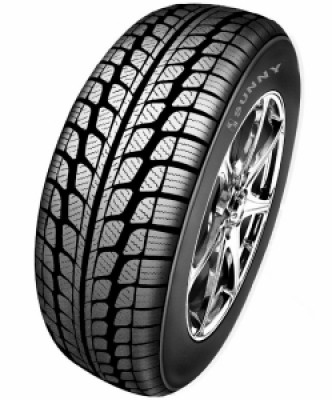
Sunny SN3830 im Test
The Sunny SN3830 is a budget-oriented winter tire that polarizes users, receiving high marks for its traction in deep snow and slush while facing severe criticism for its performance on wet, damp, or warmer road surfaces. While some drivers find them to be a capable and cost-effective solution for rural winter commuting, a significant number of users report dangerous handling characteristics and a lack of lateral grip in non-snow conditions.
Besitzer bewerten ihn 9.9 Punkte schlechter als die Messungen der Straßentests — wo sie auseinanderliegen, zeigen die beiden Auswertungen unten.
Zwei Bewertungssysteme im Vergleich
Besitzer-Scores stammen aus Bewertungen bei Händlern und auf Bewertungsportalen, Straßentest-Scores aus Messungen. Wo sie abweichen, geht es meist um eine Disziplin, die Besitzer selten ans Limit bringen.
Nach Besitzerbewertungen
58%Nach Straßentests
67.9%Was Besitzern gefällt und was nicht
Themen aus 18 Besitzerbewertungen bei Händlern und Bewertungsportalen.
The Sunny SN3830 is a budget-oriented winter tire that polarizes users, receiving high marks for its traction in deep snow and slush while facing severe criticism for its performance on wet, damp, or warmer road surfaces. While some drivers find them to be a capable and cost-effective solution for rural winter commuting, a significant number of users report dangerous handling characteristics and a lack of lateral grip in non-snow conditions.
Vorteile
- Strong traction and reliability in deep snow and slushy conditions
- High level of ride comfort and noise suppression compared to some OEM tires
- Affordable price point for budget-conscious drivers
- Predictable performance on cold, dry pavement
Nachteile
- Extremely poor grip and lateral stability on wet or damp roads
- Unpredictable handling and lack of feedback during spirited or normal driving
- Significant performance degradation in temperatures above 10°C
- Reported safety concerns regarding sudden loss of traction
Gut zu wissen
- Users with higher-torque or performance-oriented vehicles (e.g., modified Fiesta ST, Vectra 1.8SRI) frequently reported that the tire's lack of grip compromised vehicle handling.
- Drivers noted that switching to smaller wheel diameters with higher aspect ratios (e.g., 16-inch wheels) significantly improved ride comfort compared to low-profile setups.
- Owners of 4x4 vehicles reported satisfactory results for mud and snow traction, though noted limitations in braking performance.
1 Teilnahme an veröffentlichten Tests
Platzierung im jeweiligen Testfeld. Öffnen Sie einen Test für die Ergebnisse je Disziplin.
2018 Autobild UHP Winter tire Test · 195/65 R15
10. von 10
| Disziplin | Platz | Position im Feld |
|---|---|---|
| Bremsen nass | 10. von 10 | |
| Handling nass | 10. von 10 | |
| Bremsen trocken | 8. von 10 | |
| Handling trocken | 7. von 10 | |
| Bremsen Schnee | 10. von 10 | |
| Handling Schnee | 10. von 10 | |
| Rollwiderstand | 2. von 10 | |
| Aquaplaning längs | 10. von 10 | |
| Geräusch | 9. von 10 | |
| Preis | 1. von 10 |